



When getting ready to talk to a child about autism, feeling nervous is completely normal. After all, it’s an important conversation that deserves thoughtfulness and care.
Parents who have navigated this path understand that explaining autism to children—whether they’re on the spectrum, have siblings who are, or are simply curious classmates—requires honesty, patience, and a lot of love.
In this guide, you’ll find strategies we’ve gathered from families who have successfully navigated these conversations. The goal is to help you, parent or caregiver, to discuss autism in an understanding and loving way.
6 Foundation Strategies for Explaining Autism to Children
Before sitting down for this important conversation, a little preparation can make all the difference:
- See through their eyes: Remember, your child has a view of autism. Tailor your discussion to resonate with their understanding and experiences.
- Highlight the positives: Focus on the distinct talents and viewpoints autism brings. Celebrating these differences enriches the conversation.
- Encourage curiosity: Be ready for questions or emotions. Showing you’re open to talk reinforces trust.
- Keep it simple: Use clear, everyday language to explain complex ideas.
- Use visual aids: A picture book or visual story might illustrate your points more vividly than words.
- Find a peaceful spot: A quiet, comfortable place can help your child feel at ease and more open to listening.
How to Discuss Autism with Kids On & Outside the Spectrum

The approach you take may differ depending on whether you’re speaking with a child who has autism, a sibling, or friends.
Here’s how to tailor your conversation to different situations:
Explaining ASD to Your Child With Autism
When introducing your child to their diagnosis, the conversation should center on affirmation and empowerment.
Start by acknowledging their strengths and abilities—perhaps their memory, attention to detail, or passionate interest in specific topics. Explain that autism gives them a special way of seeing the world and that while some things might be more challenging for them, other things come more naturally.
You can mention that autism offers them a different outlook on life and may cause them to prefer certain activities over others. Use words that affirm their value, and show them that their differences contribute positively to who they are.
Addressing challenges honestly is important too. Reassure them that everyone faces difficulties sometimes, and you’ll always be by their side to find solutions that work for them. Explain that experiencing the world more intensely is part of what makes them uniquely themselves.
Here are some additional activities that can help your child understand and embrace their autism:
- Create an “all about me” poster: Work together to create a visual celebration of their strengths, interests, and accomplishments. This activity builds self-esteem while creating a tangible reminder of all the wonderful aspects of who they are.
- Practice explaining autism to friends: Role-play simple, comfortable ways they might describe autism to curious friends. Having ready responses helps many children feel more confident in social situations.
- Design a daily routine chart: Create a visual schedule that helps them understand and navigate their day. This practical tool can help with transitions while giving them a sense of control and predictability.
Explaining ASD to Their Siblings Without Autism
When talking with siblings who don’t have autism, focus on building understanding and empathy while acknowledging their unique place in the family. Explain that their brother or sister’s brain works differently, and that they experience the world in a unique way.
When explaining autism to family members, use specific examples to make this more relatable. Emphasize how important it is to be loving, kind, and patient, and how their empathy will greatly improve their sibling’s life.
Be transparent about why their sibling might need extra support sometimes while reassuring them that your love and attention aren’t limited resources. Every child in the family deserves to have their needs met and feelings validated.
Consider these practical approaches:
- Dedicate one-on-one time: Set aside special time for activities that each child enjoys, ensuring every child feels valued and seen.
- Encourage sibling bonding activities: Identify activities both children enjoy and can participate in together. These shared experiences build connection and understanding.
- Create space for honest feelings: Make sure siblings have a safe place to express their questions, frustrations, or worries about having a sibling with autism.
- Practice empathy together: Simple exercises like role-playing or perspective-taking games can help siblings better understand each other’s experiences.
Explaining ASD to Their Peers and Classmates
Helping classmates understand autism creates a more supportive community around your child.
When speaking with your child’s peers, explain that autism means some people might learn, play, or communicate differently and that there are several types of autism.
Help them understand that if their classmate prefers playing alone sometimes, needs extra time to answer questions, or becomes overwhelmed in noisy situations, it’s just part of how they experience the world.
Use these practical, proven approaches to how to explain autism spectrum to a child without autism:
- Question cards: Work with your child to anticipate questions their friends might ask, and develop comfortable responses they feel good about sharing.
- Friendship guide: Create a simple guide that highlights your child’s interests, preferences, and how autism affects them, giving classmates practical ways to be a good friend.
- Peer buddy system: Suggest a classroom buddy system where students learn from each other’s strengths, including those with and without autism.
- Story sessions: Arrange for books featuring diverse characters, including those with autism, to be read in your child’s classroom.
Real-Life Examples for Understanding Autism
Concrete examples and interactive elements can make autism more understandable to children. Here are two examples you can use when explaining autism to kids:
- Draw direct comparisons
“Think of the brain like a puzzle where everyone’s pieces fit together uniquely. For someone with autism, some pieces might connect differently, changing how they see the world or respond to things around them. It’s like playing a video game where everyone has different abilities or power-ups.”
- Use visual storytelling
Create or find a simple comic where the main character navigates daily life with autism superpowers, perhaps using auditory processing issues as an example. “See how our hero uses special headphones to block out the loud noises? That helps him focus on saving the day.”
Choose Diverse Resources
- Select stories that showcase people with autism living full, vibrant lives, such as “Uniquely Wired: A Story About Autism and Its Gifts” by Julia Cook. This book works particularly well for younger children.
- For visual learners, select age-appropriate documentaries or animated films that feature diverse experiences of people with autism, like “The Reason I Jump.”
- Interactive resources like Sesame Street’s materials featuring Julia, a Muppet with autism, can engage younger children. For older kids, organizations like Autism Speaks offer stories from families and children with autism.
Debunking Myths and Addressing Common Questions
When kids ask about autism, use it as a chance to address misconceptions. Explain that autism can make some senses extra sensitive (like hearing) while making certain social interactions feel a little harder.
Address common autism myths directly, especially the false idea that people with autism don’t feel emotions. Make it clear that individuals with autism often feel emotions very deeply, just express them differently.
Emphasize that autism affects everyone uniquely, and when a child with autism has a meltdown or tantrum, it’s not about getting their way—it’s a genuine response to feeling overwhelmed.
How ABA Therapy Can Help

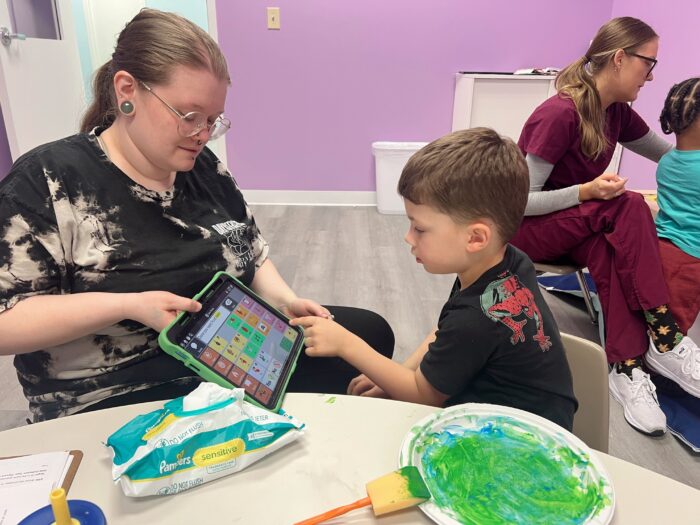
At Abacus Therapies, we believe that effective ABA therapy starts with understanding each child’s unique perspective and building from there. Our original approach uses methods to help children with autism develop communication skills, social connections, and confidence in navigating daily life.
Our therapists work closely with parents and siblings, sharing strategies that strengthen relationships and create a supportive home environment.
On a Final Note
Having honest conversations about autism builds a foundation of understanding and acceptance that children carry forward in life. These discussions help all children appreciate the value of diversity, including the variations in how our brains work.
If you have questions or would like personalized guidance on explaining autism to the children in your life, our team at Abacus Therapies is here to help. Feel free to reach out via email, phone, or message anytime. We’ll be happy to help!
FAQs
How can I explain autism to a child?
Tell your child that autism means some people’s brains sort information in a special way. This can make them great at certain tasks, but it can make some everyday actions, such as conversation, eye contact, or making friends, a bit harder for them.
What is the easiest way to describe autism?
Autism is a developmental condition that affects how a person perceives and interacts with others. It leads to differences in social interaction, communication, and behavior that can make certain social and sensory experiences more challenging.
How do you explain autism to classmates?
Explain that a classmate with autism might see the world in a special way. They might excel in certain areas and find some social situations tricky, just like everyone has things they’re good at and things they find difficult.